Segmented medical newsletters
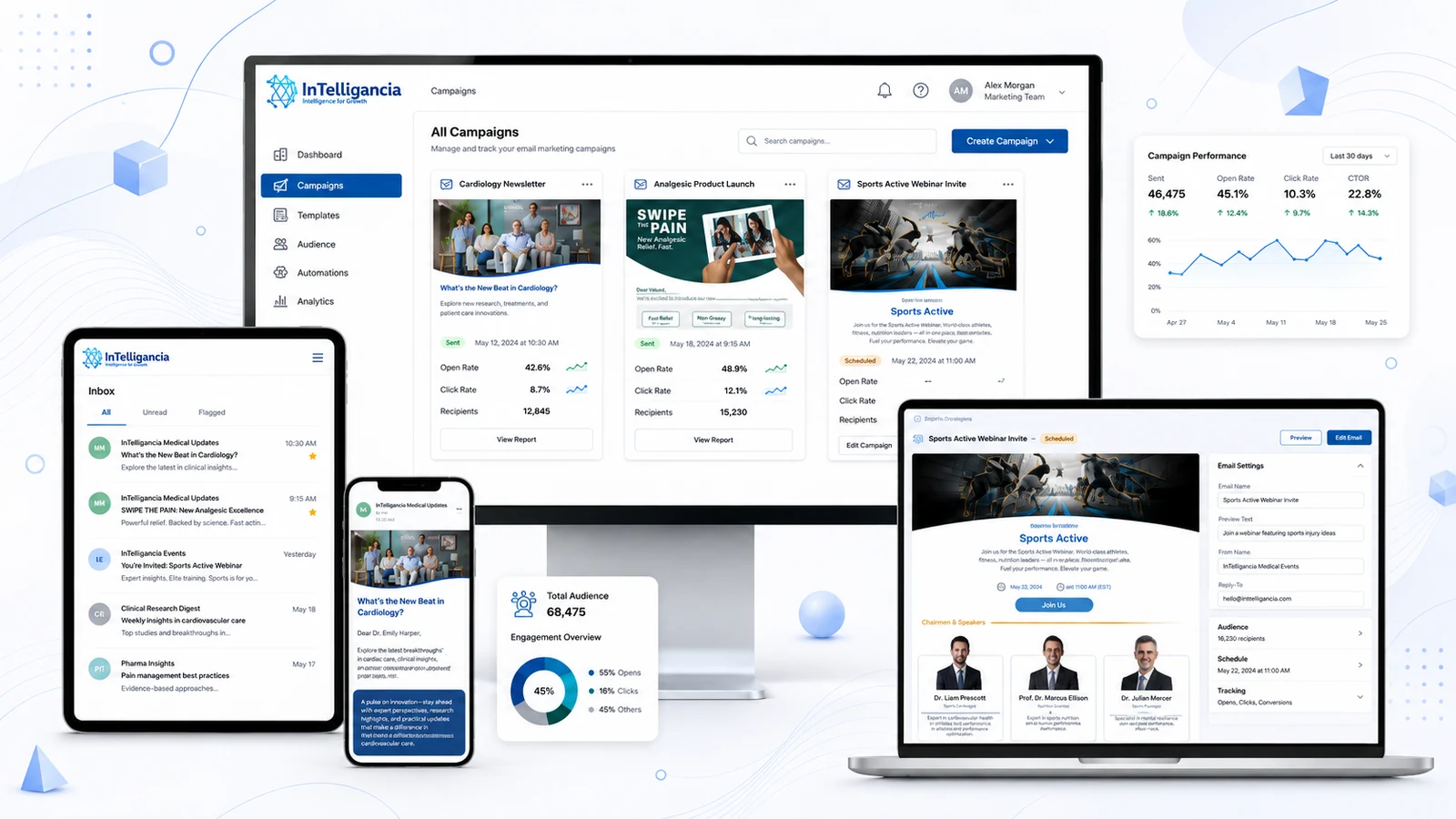
Newsletters cut by specialty and therapeutic area, so a cardiologist and an endocrinologist receive different editions of the same programme.
 Book a meeting
Medical newsletters, product campaigns and triggered sends built for healthcare professionals, with tracked CTAs into your own portal. Email is where the depth goes — the channel where a physician will read four hundred words about a trial.
Positioning
WhatsApp is unmatched for the moment that cannot wait, but no physician reads a trial summary in a chat thread. The two channels are not competing for the same slot.
What we build
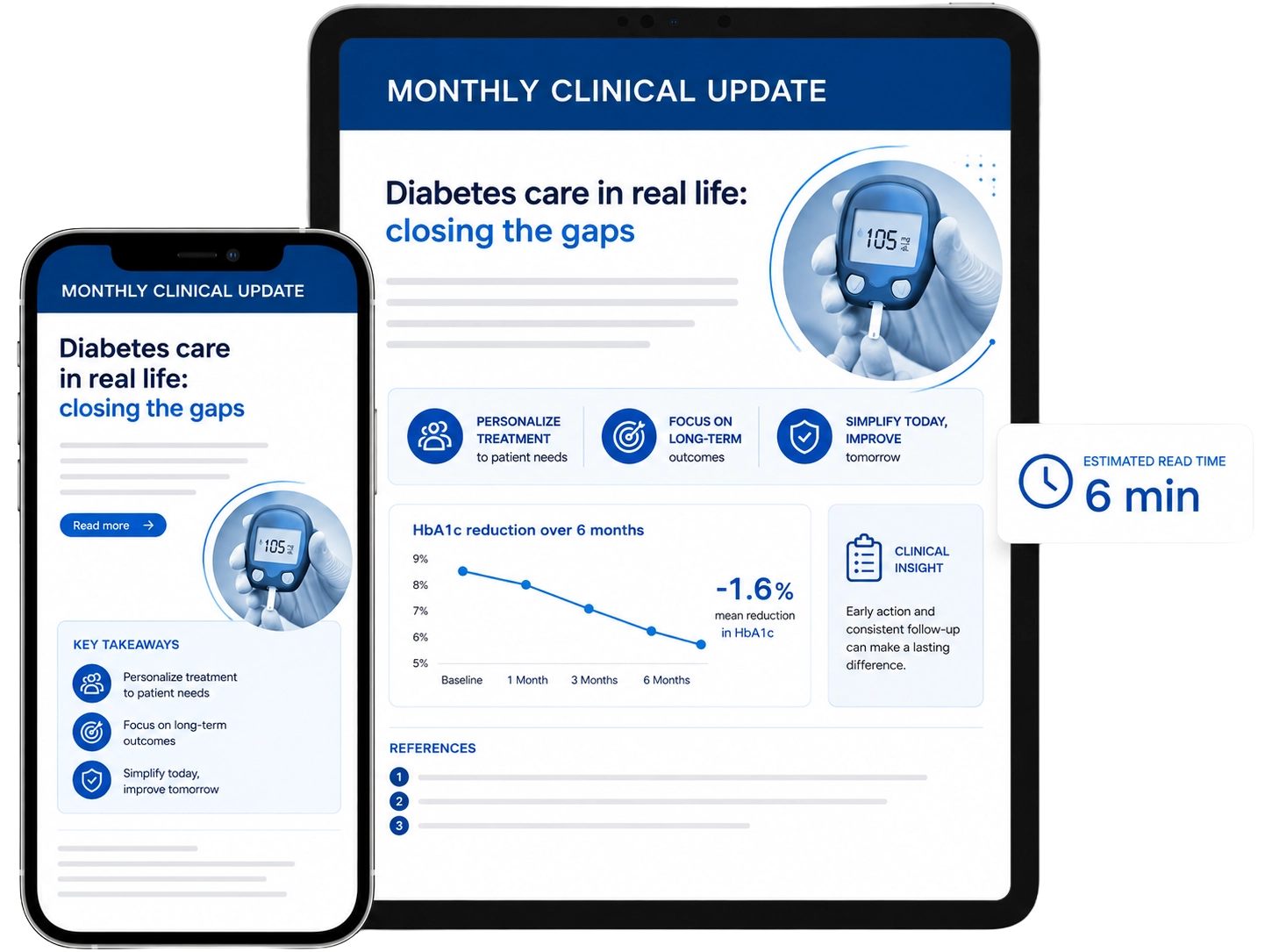
A consumer template does not survive contact with dense data, reference lists and mandatory safety information.
Newsletters cut by specialty and therapeutic area, so a cardiologist and an endocrinologist receive different editions of the same programme.
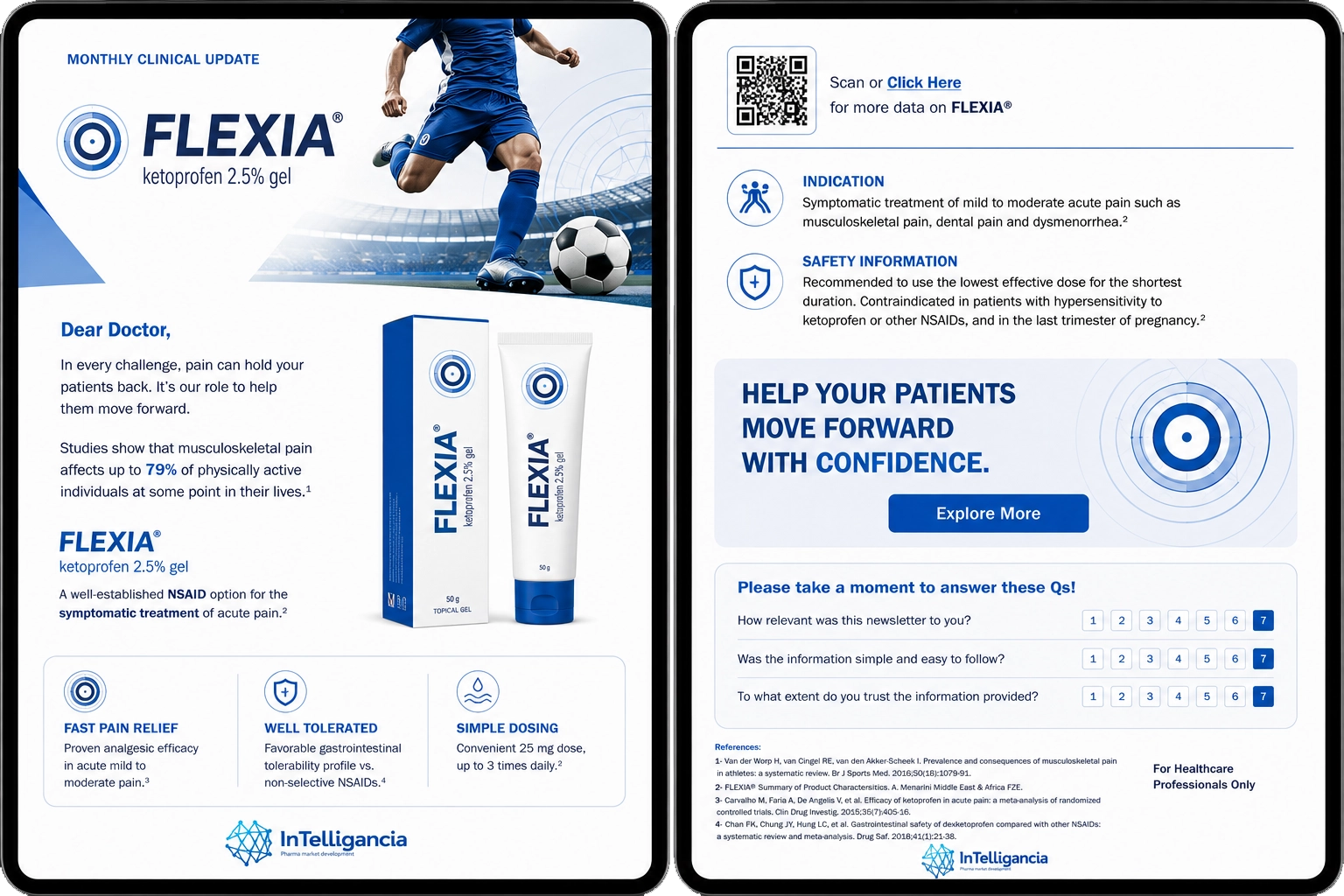
Multi-touch campaigns carrying your approved material, each touch linked to a specific tab on the product page.
Announce, remind, last call and follow-up, built once as a sequence rather than assembled by hand each time.
Emails that fire on what the HCP did rather than on a calendar date.
Printed material and congress stands carry codes that land on the portal and register as attributed traffic.
Triggered email
A scheduled newsletter reaches everyone on the same day regardless of what they did last week. A triggered email reaches one HCP because of something they just did.
Confirmation, calendar file and the product page for that molecule go out immediately.
RecordedRegistration and source campaign.Recording, certificate and the related on-demand lecture follow.
RecordedAttendance and time watched.The recording goes out with a lighter re-invitation to the next session.
RecordedNo-show against the profile.The related trial data and an invitation to the session covering it follow.
RecordedDownload and topic affinity.The dosing resources pack goes out with an offer of rep contact.
RecordedRepeat tab views and offer made.A reactivation sequence runs and the profile is flagged for WhatsApp instead.
RecordedInactivity window and channel switch.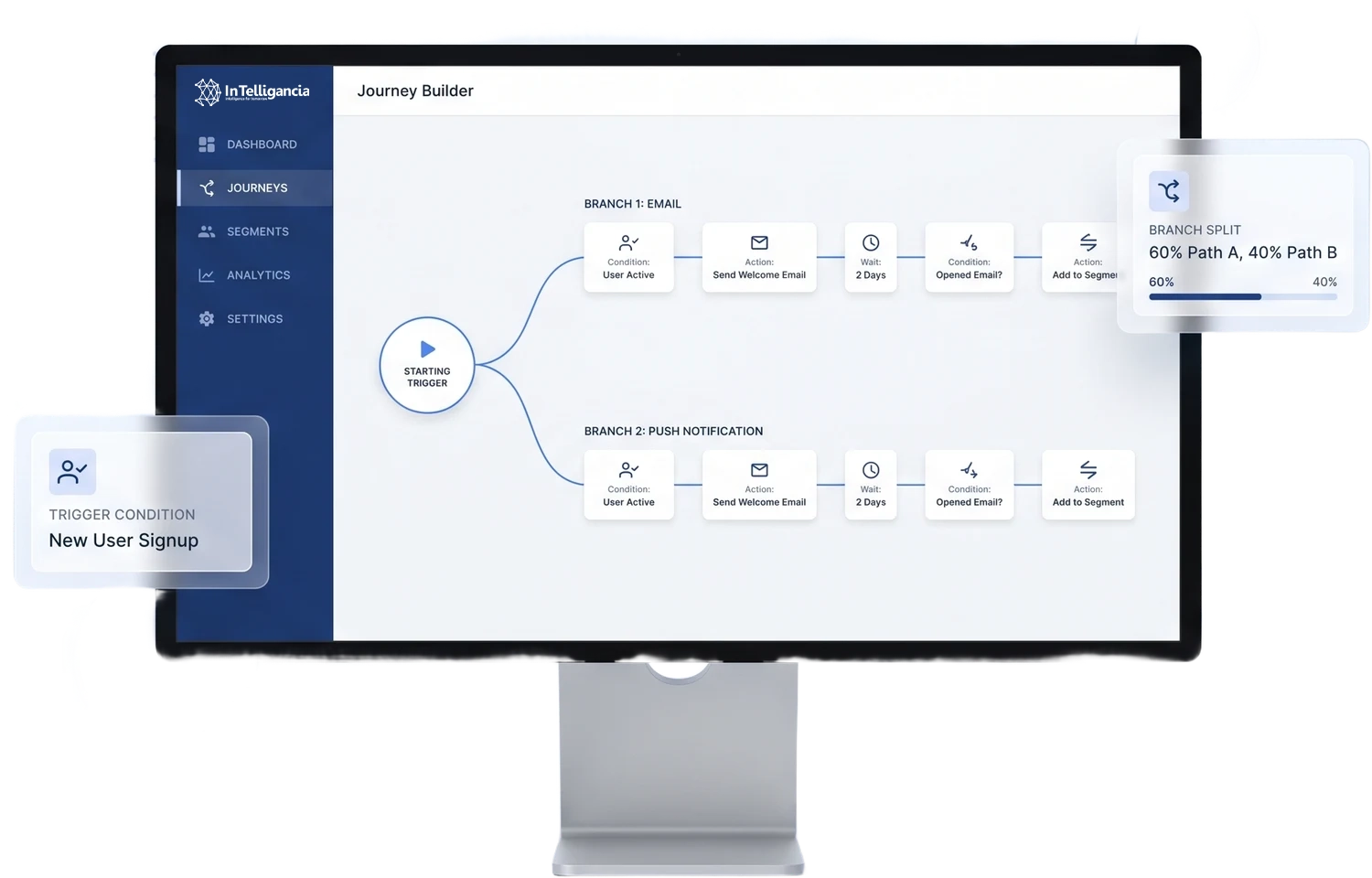
Campaign management
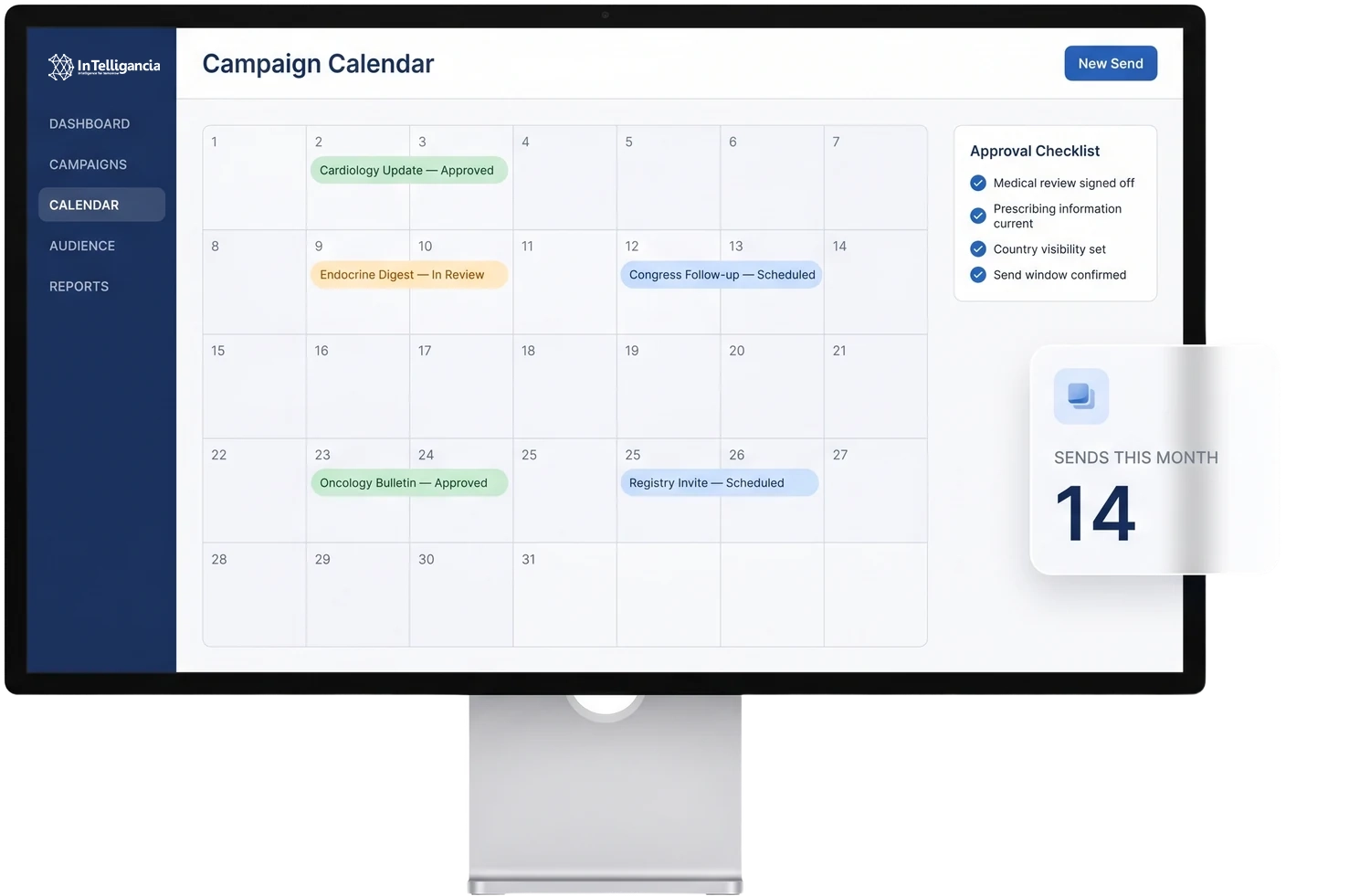
Campaign management is where most email programmes quietly fail. Lists drift, sends collide, and nobody can say which touch produced which result.
De-duplication, bounce handling and suppression lists, synchronised with the portal preference centre so an opt-out anywhere applies everywhere.
No HCP receives an email and a WhatsApp message inside the same window, and multi-touch campaigns run as a built sequence rather than by hand.
Content routes through medical and regulatory review before scheduling, and authentication, domain reputation and send patterns are managed against the hospital mail systems used across the Gulf.
Reporting
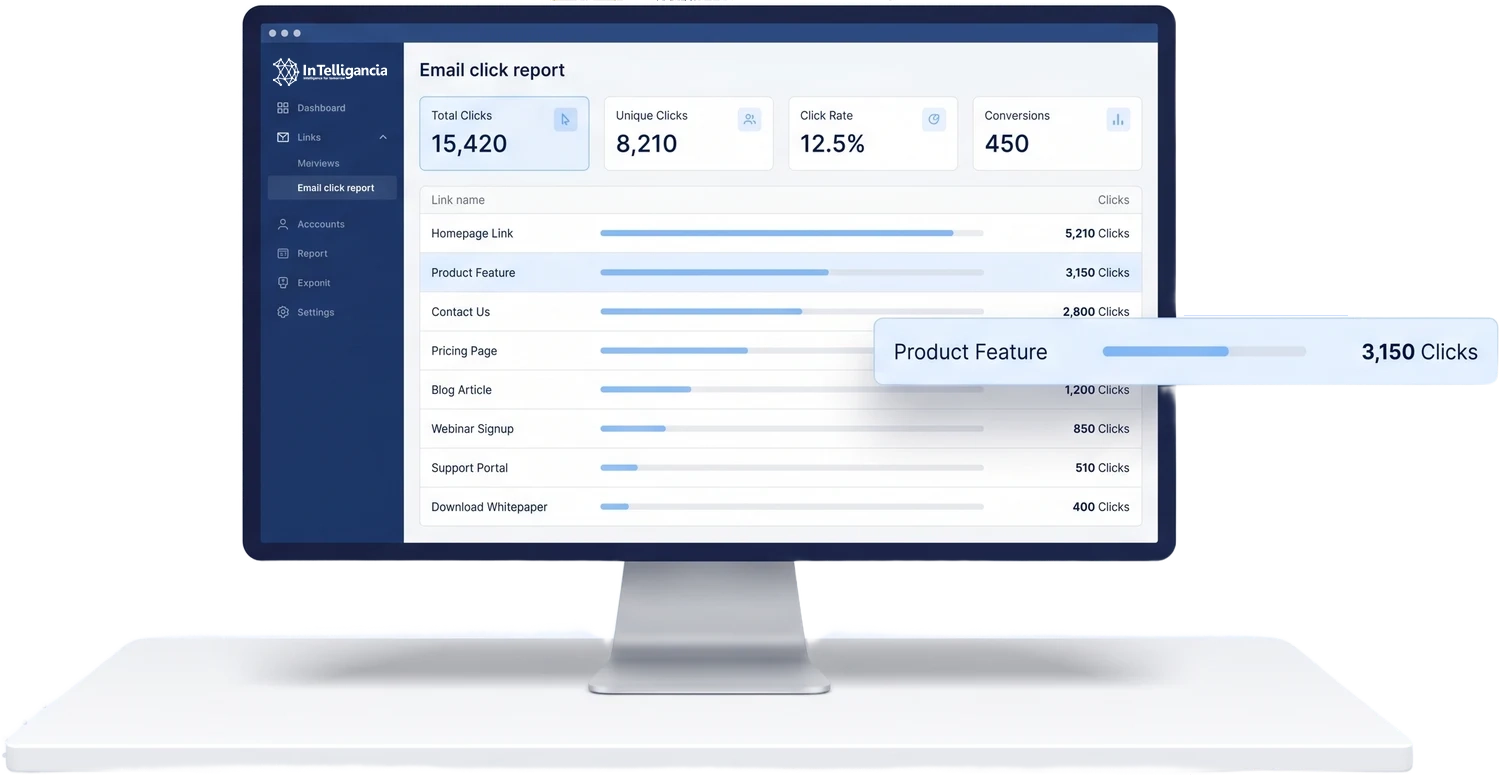
A total tells you the send worked. A per-link count tells you which subject the audience actually came for — and that is the part the next send is built on.
How it connects
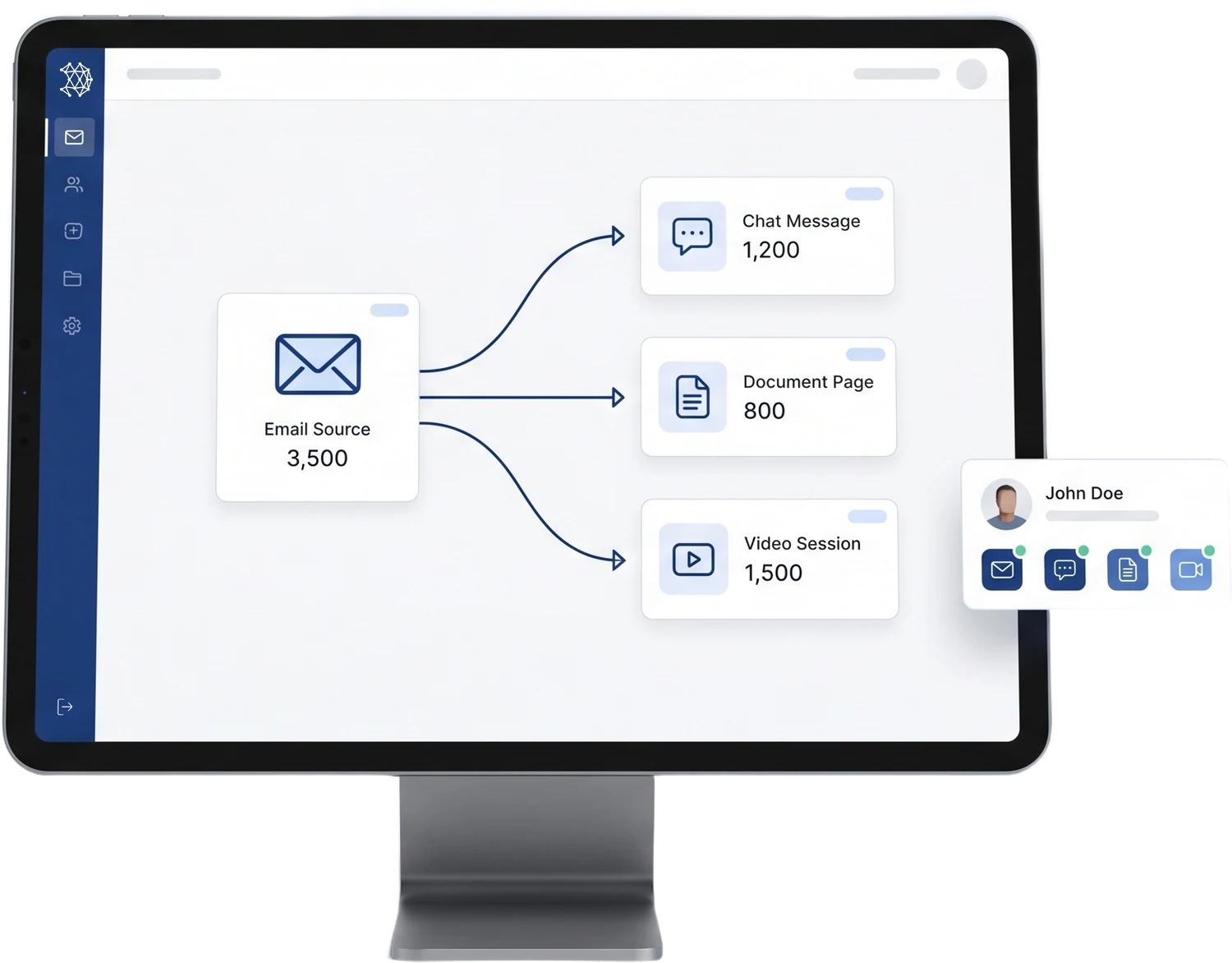
Email is usually the first touch and rarely the last. Its job is to open the sequence and hand the HCP to a channel that can go deeper.
Campaign CTAs land on the specific tab that matches the message.
Newsletters drive the return visits, and the registration, preferences and consent captured there govern every send.
The invitation sequence produces the registration.
Coordinated, never duplicated: email invites, WhatsApp reminds.
QR codes on printed material and stands return attributed portal traffic.
Every open and every click updates the engagement score and topic affinity.
FAQ
From the portal. Registration captures the HCP, verifies them and takes explicit consent per channel. We do not work from purchased or scraped lists, and no email goes to an address that did not opt in.
Through authentication, domain reputation work and send-pattern management. Some institutional mail environments filter aggressively regardless of what is done upstream, which is one of the reasons a second channel matters. WhatsApp is not subject to the same filtering.
Yes. Templates support Arabic and English, with right-to-left layout built properly rather than mirrored as an afterthought. Language is a captured HCP preference.
We handle structure, design and build. Medical content comes from your team and goes through your approval workflow. Editorial assembly from your approved sources can be included, agreed per programme.
It varies by market, by specialty, and by whether the address is institutional or personal. We report against your own baseline rather than an industry average, because industry averages for this region are unreliable.
Engagement data is structured for export into a CRM or Veeva environment. Which integrations run directly rather than by export depends on your setup, and we confirm that during scoping.
The whole point
Every channel writes back to the same profile. One record per doctor, one score, one next action — whichever channel produced the signal.
Book a meeting